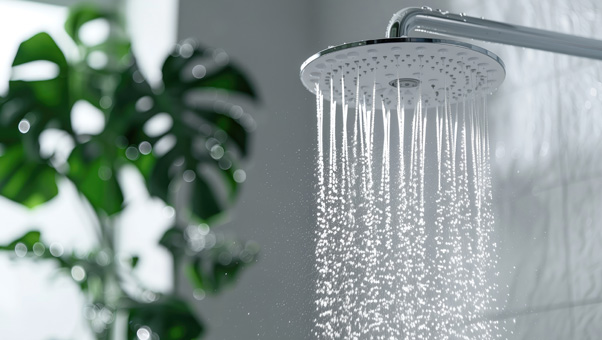
Low water pressure turns everyday tasks into daily frustrations. Weak shower streams, slow-filling washing machines, and sprinklers that barely reach the edge of the lawn are common signs that your home’s water supply isn’t delivering the flow rate or pressure you need.
Installing a water pressure booster pump offers a reliable, permanent solution to restore strong, consistent municipal or tank water pressure throughout your entire property.
In this article, we’ll discuss pressure booster pumps and then go on to discuss how pressure tanks and water pressure booster pumps work together.
Common reasons for low water pressure

Before installing equipment, it helps to understand why water pressure drops in the first place:
- High demand/peak hours: When multiple neighbours use water at the same time, municipal supply pressure can drop significantly.
- Gravity and distance: If your home sits higher than the municipal supply line or far from the main water meter, friction and gravity reduce the pressure arriving at your tap.
- In-home demand: Running a dishwasher, washing machine, and shower at the same time distributes available pressure across multiple outlets, dropping flow at each one.
- Plumbing Obstructions: Ageing pipes with mineral buildup or undersized supply lines restrict overall flow capacity.
Definition of a water pressure booster pump

A water pressure booster pump is a mechanical device that increases the pressure and flow rate of water entering your home. Think of it as an inline fan for your plumbing system: water enters the pump at existing low pressure, receives a speed and force boost from an internal impeller, and exits into your plumbing at an elevated, controlled pressure.
Whether drawing from municipal water mains, a rainwater harvesting tank, or a secondary storage reservoir, a booster pump ensures your home maintains adequate pressure across multiple taps simultaneously.
How does a water pressure booster pump work?
A domestic water pressure pump operates using a few key physical principles and components working in harmony.
If you’d like to find out how a booster pump works, we explain this simply in A Guide to Booster Pumps for Homes and Small Businesses.
Pressure pump prices and different types of pressure pumps
Fixed-speed automatic booster systems
Standard, budget-friendly pumps fitted with digital controllers that automatically turn the motor on when a tap opens and off when it closes.
| Pump Model | Key Specs | Common Use | *Price (Incl. VAT) |
|---|---|---|---|
| Zilmet ZIL 60-1M + Controller | 0.37kW / 220V Max flow: 35 L/min Max pressure: 4.0 Bar | Small homes or flats boosting water to 1–2 taps simultaneously. | R1704.30 – R2500.00 |
| Zilmet ZIL 10H + Controller | 0.75kW / 220V Max flow: 50 L/min Max pressure: 5.1 Bar | Standard suburban households supplying 2–3 taps or showers. | R3019.90 – R3500.00 |
| Zilmet ZIL 170-M + Controller | 1.1kW / 220V Max flow: 140 L/min Max pressure: 3.6 Bar | Larger residential properties or dual-living homes running 4–5 outlets at once. | R3909.43 – R4500.00 |
*Prices as at October 2026
Variable speed drive (VSD / Inverter) systems
Smart, electronic booster pumps that dynamically adjust motor speed to match exact household demand, maintaining constant water pressure while saving up to 30%+ on electricity.
| Pump Model | Key Specs | Common Use | *Price (Incl. VAT) |
|---|---|---|---|
| Zilmet Magic Box | 0.65kW / 220V Compact smart inverter Integrated pressure sensor | Energy-efficient constant-pressure boosting for small-to-medium residential homes. | R7176.00 – R7700.00 |
| DAB E.Sybox Mini 3 | 0.75kW / 220V Ultra-quiet operation Inverter variable speed control | Modern family homes needing constant line pressure, whisper-quiet operation, and compact installation. | R12689.00 – R13300.00 |
| DAB E.Sybox | 1.1kW / 220V Multi-stage self-priming Integrated water-cooled motor | High-demand luxury residences, large multi-bathroom houses, or light commercial properties. | R19999.00 – R21000.00 |
*Prices as at October 2026
How to choose the right size pressure booster pump for your home
Selecting the ideal pump isn’t just about picking the highest horsepower model available:
- oversizing can cause pipe noise and unnecessary energy use,
- while undersizing will leave you with weak pressure.
See our Guide to understand how to choose the right size.
If you’re not sure and would like to shortcut this process, please contact us – for any questions about water pressure booster pumps, or if you’d like us to recommend the right size pump for your home or business, or if you’d like an installation.
Our team of experts have 30+ years experience in the pump industry and will help you.
| Factor | What to Consider |
|---|---|
| Flow rate requirements (L/min or GPM) | Count the maximum number of fixtures likely to run at once (e.g., 2 showers + 1 washing machine = approx. 30–40 litres per minute). |
| Required pressure boost (Bar / PSI) | Determine your existing baseline pressure and target standard household pressure (typically 3.0 to 4.5 Bar). |
| Total dynamic head (TDH) | Account for elevation changes from the pump to the highest fixture in the house, plus pipe friction losses. |
| Power source & speed control | Fixed-speed pumps run at full capacity when active, while Variable Speed Drive (VSD) pumps adjust motor speed to match exact demand, offering super quiet operation and optimal energy savings. |
The role of the pressure tank
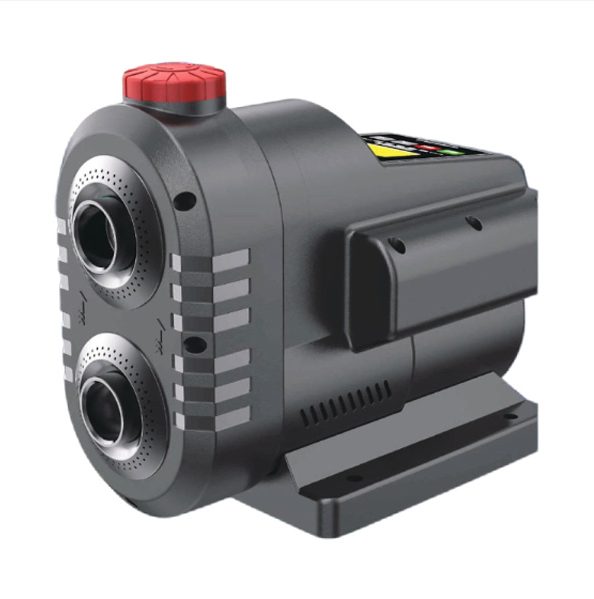
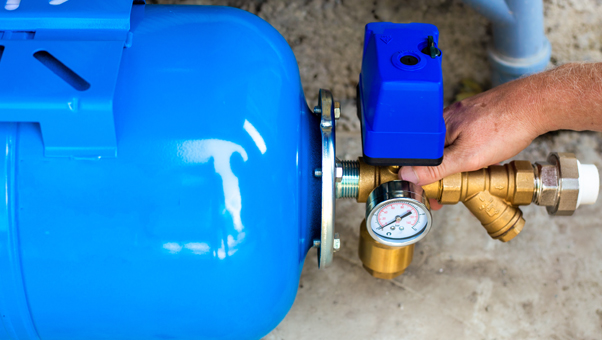
Pairing a booster pump with a pressure expansion tank (often called a diaphragm vessel or pressure vessel) dramatically improves system performance and efficiency.
- Prevents short-cycling: Without a tank, the pump must switch on every single time someone opens a tap to wash their hands or rinse a glass. A pressure tank stores a cushion of pressurised water and air, allowing small water demands to be met without turning the motor on every time.
- Reduces energy usage & motor wear: Fewer motor starts extending the lifespan of the electrical components and lower household energy consumption.
- Eliminates water hammer: The air bladder inside the tank absorbs sudden shockwaves caused by fast-closing valves (like washing machine solenoid valves), protecting internal pipes from damage.
How do a pressure tank and water pressure booster pump work together?
Imagine filling a bucket from a tap that only trickles. That’s low water pressure, and it’s a common problem in South African homes.
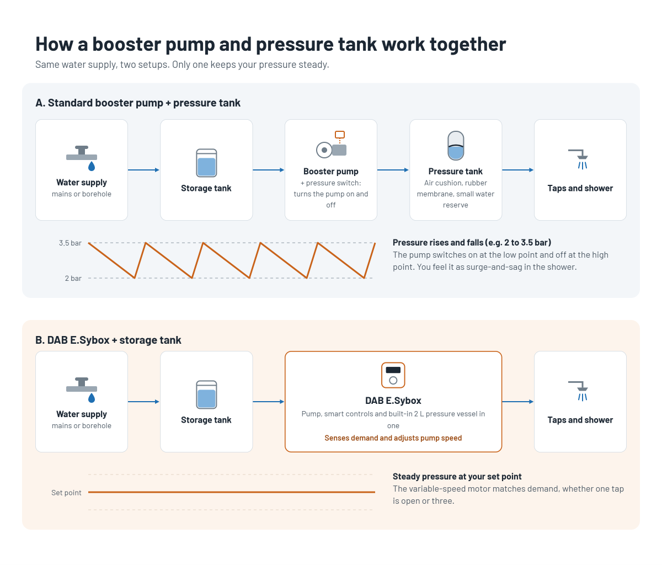
A booster pump and a pressure tank team up to fix it. The pump adds the push. The tank smooths things out and stops the pump from working harder than it needs to.
- Water arrives. It comes from the municipal supply, or from a storage tank fed by the mains or a borehole. If your supply is unreliable or very weak, a storage tank is the first step, because a pump can only boost the water it receives.
- The pump adds pressure. Water flows into the pump, which spins it up and sends it out at a much higher pressure.
- The pressure tank holds a reserve. Inside the tank, a rubber membrane separates the water from a cushion of compressed air. As the pump fills the tank, the air compresses like a spring.
- Small demands are covered. Flush a toilet or fill a kettle, and the compressed air pushes out the stored water. The pump stays off.
- The pump kicks in when needed. Once pressure drops to a set point, the pump switches on. For bigger demands, like a shower, the pump runs the whole time.
Think of it like a car engine: starting is what causes the most wear. The pressure tank means the pump doesn’t have to fire up every time someone grabs a glass of water.
The catch: with a standard pump and tank, pressure rises and falls between the switch-on and switch-off points. That’s the surge-and-sag you feel in the shower.
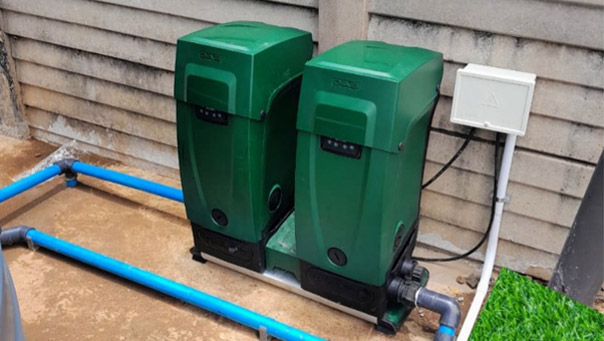
The fix: the DAB E.Sybox combines the pump, smart controls and a built-in pressure vessel in one unit. Its variable-speed motor adjusts to demand, so you get the same steady pressure whether one tap is open or three.
AfriPumps also does installations of water pressure booster pump systems.
Enquire about an installation.
Finding the right solution
Investing in a domestic water pressure pump restores convenience and efficiency to your daily routine.
When comparing models, look beyond just the initial water pressure booster pump price; factor in:
- Energy efficiency ratings,
- Built-in dry-run protection,
- Warranty support,
- and long-term maintenance needs
This will help to ensure your system provides quiet, reliable pressure.
Next Steps
If you have any questions about water booster pumps or any pump-related questions, please contact us or read our blog posts on booster pumps. If you need more information on pressure pumps for your home or business, have a look at this guide article.
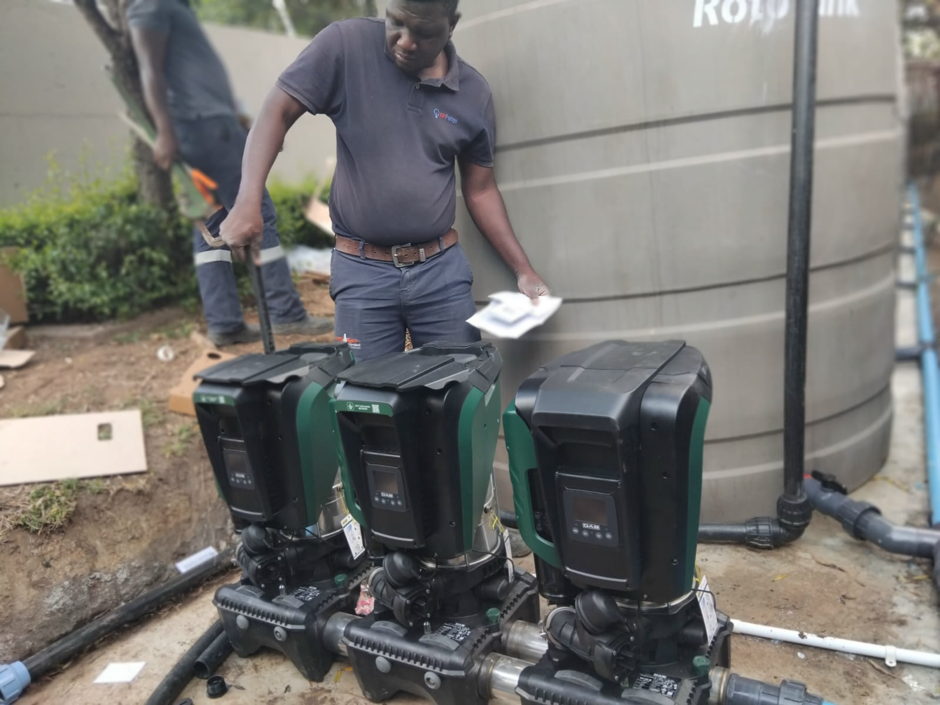
AfriPumps expert technicians do installations in KZN and Joburg.