

When you draw water from a JoJo tank, borehole, municipal supply, or a river, you need to get the water from the source to where it’s needed in your house or business.
A pressure pump works to provide a steady water flow and pressure – sending water to reach every tap, shower, and appliance.
In this guide, we’ll explain briefly:
- How a water pressure pump works
- What types are available
- Typical pressure pump prices
- Pressure pumps for JoJo tanks
We’ll answer some questions we are often asked:
- Which pressure pump is best for home use?
- How long should a pressure pump last?
Why Do You Need a Water Pressure Pump?
Low water pressure is a common problem in South Africa, especially when:
- There are municipal restrictions / water shedding
- Stored water from a JoJo tank needs to get to taps
- Businesses need high pressure water for activities
Installing a water pressure pump solves these challenges by:
- Providing constant pressure for showers and taps
- Maintaining reliable supply during water outages when paired with a tank
- Improving performance of appliances / machines
In short, it makes your water system behave like a fully pressurised network, even when running off stored or low-pressure sources.
What is a Pressure Pump and How Does It Work?
A pressure pump is like a heart in a body. Just as the heart pushes blood where it needs to go, a pump pushes water through the pipes, so everything runs smoothly.
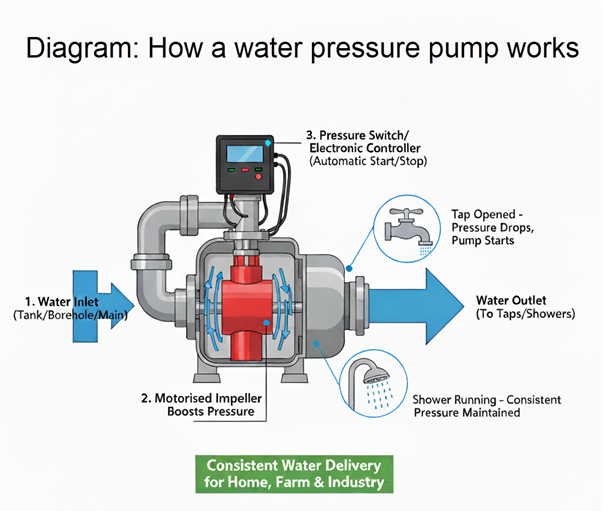
How a water pressure pump works:
- The pump draws water from a tank, borehole, or main supply.
- A motorised impeller increases water speed and pressure.
- A pressure switch or electronic controller starts and stops the pump automatically based on demand.
Practical examples:
Rainwater Harvesting:
Water from a tank doesn’t have enough pressure to feed taps directly. A pump makes the stored water usable throughout the home.
Household Water Supply:
When a home is on a slope and the water tank sits below the house, the natural pressure isn’t strong enough to push water up to the taps. A pressure pump “boosts” the force so showers, sinks and washing machines work properly.
Process Water for Food & Beverage Factories:
Factories need steady water pressure to maintain hygiene standards. An industrial pressure pump is like the drive motor of a conveyor belt — without it, nothing moves where it needs to go.
What Types of Water Pressure Pumps Are Available?
| Type | Best for | Key Features |
|---|---|---|
| Centrifugal pressure pump | Homes and irrigation | Durable, good for clean water, affordable |
| Submersible pressure pump | Deep tanks, wells, boreholes | Quiet, energy-efficient |
| Variable speed (VSD) pump | Multi-outlet systems, commercial | Adjusts speed automatically to demand |
What is the difference between a Pressure Pump and a Booster Pump?
In our experience, in the pump industry in South Africa, we usually talk about a pressure pump and a booster pump interchangeably and both names refer to the same thing.
However, technically speaking, a booster pump adds extra pressure, or “tops up” the water pressure.
How Much Does a Pressure Pump Cost in South Africa
The pressure pump price varies depending on pump size, flow rate, and brand.
Typical price ranges *:
- Entry-level domestic pumps: R1,500 – R2,500
- Mid-range household or garden pumps: R2,500 – R7,000
- High pressure water pumps for larger homes or irrigation: R7,000 – R20,000
- Variable-speed or industrial units: R8,000 and above
* Price range estimate as at January 2026.
When comparing pressure pump prices, consider:
- Efficiency,
- Warranty, and
- Brand’s reputation
- Availability of local service or parts
NOT just upfront cost.
View Pressure / Booster Pump Prices online.
You need to get the right pump for what you need to do
We can help you help you choose the right pump for what you need to do.
Go here to ask advice about the best pump for your application.
What Is the Right Pressure Pump for a JoJo Tank?
If you’re using stored rainwater or municipal backup water, a pressure pump for a JoJo tank is a must-have.
These water pump and tank systems typically include:
- An automatic pressure pump
- A connector kit to link the pump to the tank outlet
- A controller or switch to regulate pressure automatically
Together, these components form an efficient JoJo tank and water pressure installation, ensuring that stored water flows smoothly through your plumbing.
Tip: Choose a pump with automatic start/stop and dry-run protection to extend lifespan and prevent damage when the tank runs empty.

A JoJo tank and water pressure installation for a shopping centre by AfriPumps.
Find out more here:
Water Pump for JoJo Tank: Sizes, Prices & Installation Explained
Which pressure pump is best for home use?
In our experience*, we find that these brands of pressure pumps work best under South African conditions.
- Zilmet provide basic automatic booster pumps
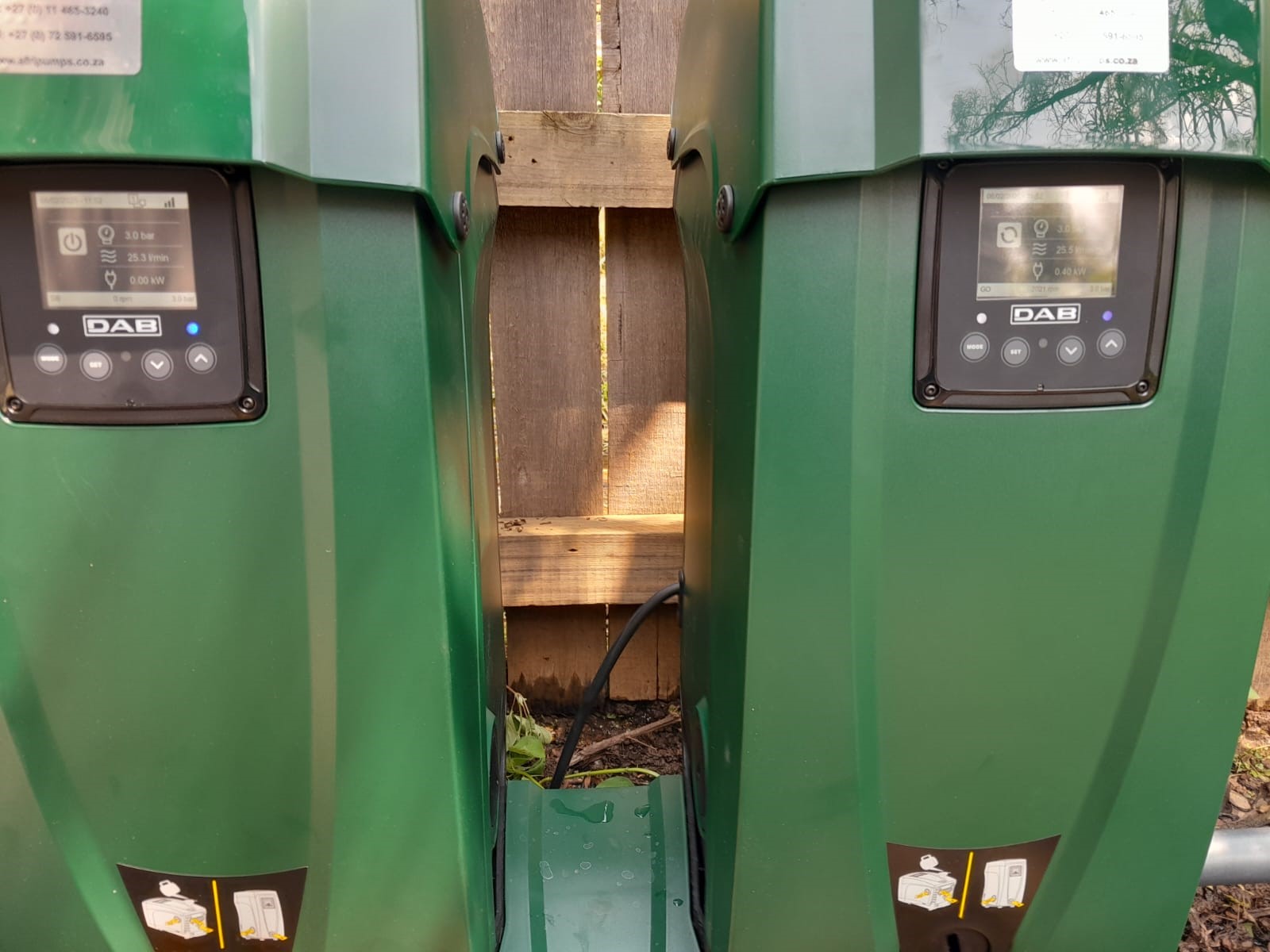
- The Dab E.Sybox range of water pressure pumps are popular
- Ebara pressure booster pumps have a wide, well-supported range
- Grundfos Scala2 is a self-priming pressure pumps
- Foras pressure booster pumps are known to be reliable
- Tesk have a low noise range of adjustable pressure pumps
- Pedrollo pressurisation system and Pentax multistage pumps with inverters
* At AfriPumps, Richard Austin-Williams, Cara Austin-Williams and Iban Erasmus have a combined 48+ years’ experience in the water pump industry.
What Size Pressure Pump Do You Need?
| Application | Recommended Pressure | Pump Example |
|---|---|---|
| Small home or garden | 2–3 bar | 0.37–0.55 kW centrifugal pump |
| Small home or garden | 3–4 bar | 0.75–1.1 kW automatic pump |
| Large home / irrigation | 4–5 bar | 1.5–2.2 kW high pressure pump |
If you’re unsure, ask us for help to calculate total head (distance and height) and flow rate requirements – this determines the correct pump capacity.
How Do You Install a Pressure Pump?
Basic installation steps:
- Select a stable, dry surface near the tank or water source.
- Connect the inlet pipe from the tank or supply to the pump.
- Attach the outlet pipe leading to your home or irrigation line.
- Prime the pump (if required).
- Power up and test water flow and pressure at multiple outlets.
For safety and compliance, it’s best to use a qualified installer for your JoJo tank and water pressure installation.
This ensures proper wiring, correct fittings, and leak-free operation.

An installation of a water back-up system with a pressure pump by the AfriPumps technical team.
How Long Should a Pressure Pump Last?
In our service centre, we find that, with proper maintenance, a quality pressure pump will last up to 10 years.
It’s important to get the right pump for your situation if you want it to last:
Why? Choosing a pump that’s not well suited to the water pressure will mean that the pump will over-perform and won’t last as long as it should.
4 Tips to extend the life of your water pump:
- Keep filters clean
- Avoid letting the pump run dry
- Protect it from weather exposure
- Service regularly if in continuous use
Reliable brands with local support make a difference in long-term performance.
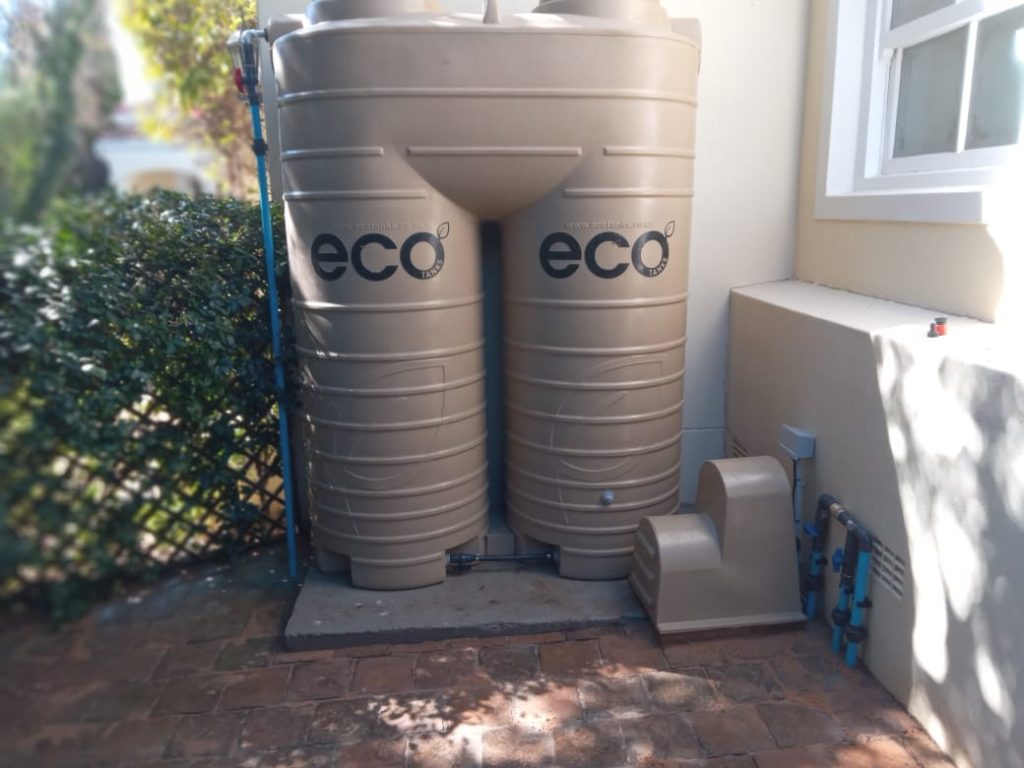
An example of an AfriPumps installation of a municipal backup system with a water pressure pump that supplies water to a household in the Johannesburg area.
Ask a Question about a pressure pump.
To summarise:
A pressure pump is designed to increase the flow and pressure of water in a plumbing system.
It automatically detects when water is being used (such as when a tap or shower is opened) and boosts the pressure to a consistent level.
In South Africa, we often refer to pressure pumps as booster pumps.
View Pressure / Booster Pump Prices online.
OR
Go here to ask advice about the best pump for your application.


